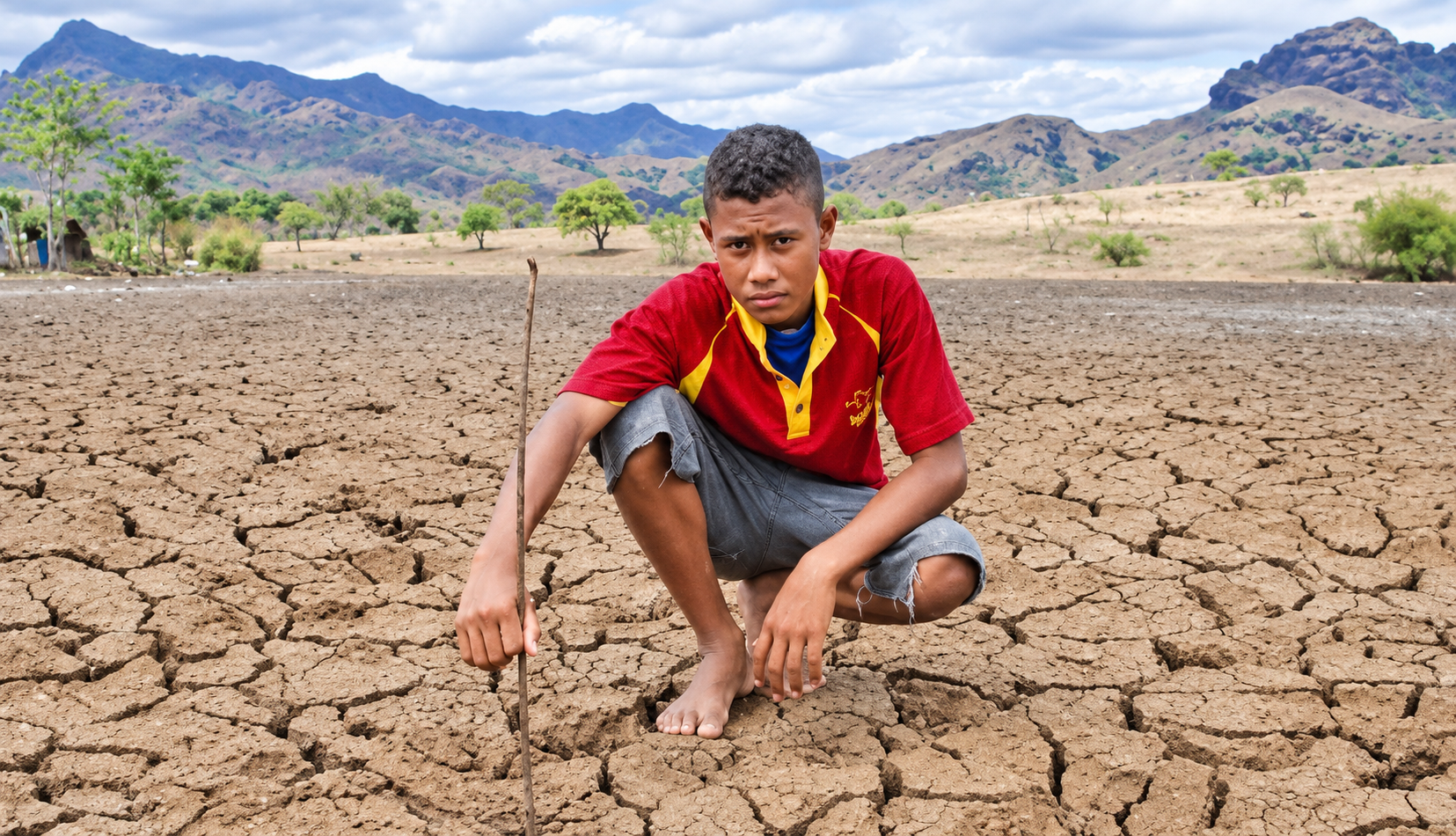
The situation
An El Nino-driven drought has left Fiji with widespread water shortages, and a national state of disaster was declared on 18 November. Almost 67,000 people depend on critical or failed supplies, with the Western and Northern Divisions worst affected. Authorities are trucking in emergency water and activating boreholes, with more than 2 million litres delivered to maritime communities so far. But the Fiji Meteorological Service forecasts below-normal rainfall through January and likely again from February to April, and rivers, dams and groundwater will take time to recover. Pressure is also building on electricity generation as hydro-dam reserves fall, which could disrupt services that rely on powered pumping.
Communities we are standing with
Nabukadogo Village, Macuata: more than 100 villagers share a local source that has dried up, with alternative supply available for only one hour each morning. Water shortages are disrupting school attendance and sanitation.
Vuiyakana Village, Macuata: 14 households, 87 people, face inadequate borehole and catchment supplies.
Vavalagi, Labasa: about 15 families report that their principal water source has completely dried up.
Ellington Settlement, Rakiraki: more than 20 families face worsening shortages as their river source dries up.
What we are doing
Our team in Fiji is preparing emergency bottled water for families in Ra, Ba and Macuata, with deliveries planned within days, in sha Allah. Each verified family will receive two cartons, 24 bottles of clean drinking water. We are prioritising households with failed or severely restricted supplies, especially those with children, older people, pregnant or breastfeeding women and people with disabilities, and working with provincial and district authorities and community representatives to confirm need and avoid duplication.
“Fiji’s drought is turning access to safe drinking water into a daily struggle for affected families. Dwindling water supplies are placing health, hygiene and livelihoods under increasing pressure, particularly in vulnerable and remote communities.”
Siraz Rasheed, Project Manager, MAA Fiji
This is a long drought. We are also researching longer-term solutions, including water wells, so communities are supported well beyond this emergency.
How your donation helps
- $50: delivers 60 bottles of clean drinking water to one family
- $100: delivers water to five families
- $200: delivers water to ten families